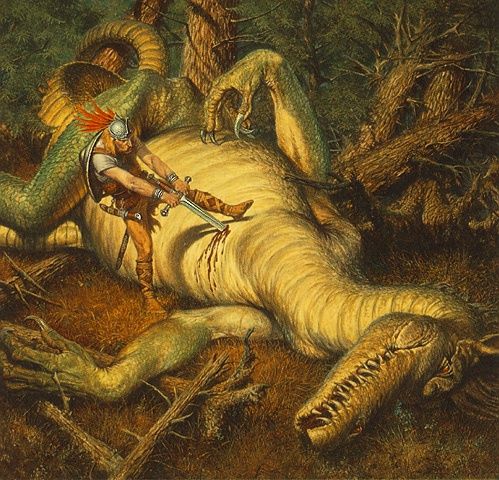
St. John the Baptist Sees Jesus from Afar by James Tissot
During Advent, I have been reflecting on the injunction to “Prepare the way for the Lord.” This is the life message of John the Baptist, and he does it with his whole person even unto death. Usually I receive this admonition in Advent as one for my own heart to make ready more space for the Lord, to give the long awaited Jesus more access to my valleys and mountains so that he can make them into a straight path for his presence. My death to self gives more breath to the risen Christ living his life in me.
I have been blessed this year by the book, The Mystery of Holy Night, a compilation of Dietrich Bonhoeffer’s sermons on the Incarnation interspersed with art on the subject. The opening page quotes a letter he wrote from prison on the first Sunday in Advent, 1943, where he was imprisoned for his stand against the Nazis. Here is what he wrote to his parents:
Easter Vigil by ourselves (and Deacon Aunt Margie and cousins Charlotte and Josiah)
My uncle used to joke at the end of an evening, “We enjoyed ourselves…that’s about all we enjoyed…” Here at home quarantined with ourselves I find we are enjoying ourselves… some of the time; we are also disappointed in ourselves or bored with ourselves a lot of the time.
I cannot imagine more apropos words during the coronavirus confinement than Jesus’ words: “Stay with me.” We have heard loudly the injunction to “stay at home,” and for many this has led to isolation, loneliness, or confinement with people of whom we can only endure small doses. But Jesus offers companionship, “Stay with ME.”
(Of course his injunction to “Watch and pray,” also has new meaning as we all turn on our devices to watch our holy week services.)
Let’s suppose that you awaken tomorrow morning to a phone call. Some distant relative has died and left you with an ample inheritance that will set you up for the rest of your life. You have to wait to receive it in full, though, for five years. But for the next five years, you can ask for what you need, and it will be provided. How would you live the next five years differently than you live your life now? You do not have the inheritance in your bank account yet, but your future is secure. Well, in fact, this is the truth for every believer: Jesus, when he ascended, left us with an inheritance.
It is a heavy responsibility to be the primary gatekeeper for your children’s imaginations until they grow up to be old enough to take on the responsibility themselves. Their imaginations are priceless treasures that you are given the opportunity to shape and guide so that they have a rich inner life.
This is the second part to a post that casts the vision for the battle we are in for our children’s imaginations. Please read or re-read that post so that this does not seem like a list of heavy burdens or rules. It is the vision that motivates all our choices.
In the middle of the night, my six year old came into our bedroom wanting to crawl into bed with us, saying he had had a very bad dream. When I cuddled him close I asked him if he wanted to tell me about it. He said he didn’t want to tell because it was so upsetting. I prayed for him and assured him of his safety. But he could not fall asleep again. He whispered, “When I close my eyes, the evil man is still alive.”
Isn’t that the case with all of our imaginations? It is the world fully alive when we close our eyes, when we gaze out the window, when we are still.
Throughout this Lent, I have been meditating on the call to drink the cup with the Lord. “Unless you drink this cup, you have no part in me.”
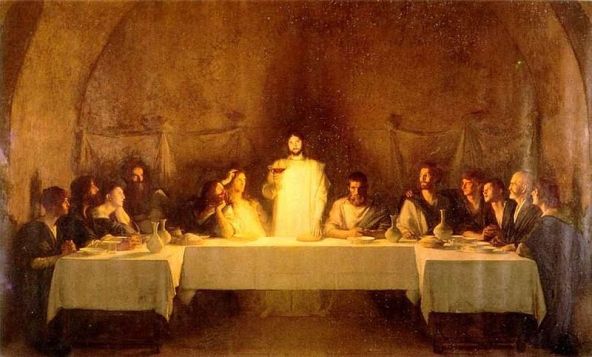
The Last Supper, Pascal Dagnan Bouveret
What is the cup we are drinking? Well, certainly in the Garden when Jesus asks that the cup be passed by, he is referring to the suffering he must endure. The cup of Jesus we are to drink involves suffering. We are to embrace the suffering that Jesus calls us into as his own people, his family. We have no part in him if we do not drink it. In fact, Romans 8:17 says that we are “fellow heirs with Christ provided we suffer with him…”
In every marriage of childbearing age, this question will inevitably surface time and again: Do we have another child or not? And in some ways, “To have or not to have,” is not so far from the original phrase, “To be or not to be?” We are considering something of such magnitude–do we bring a new life into the world that would not otherwise be? And close on it, follow feelings about our own capacity to be as we bring more life into the world!
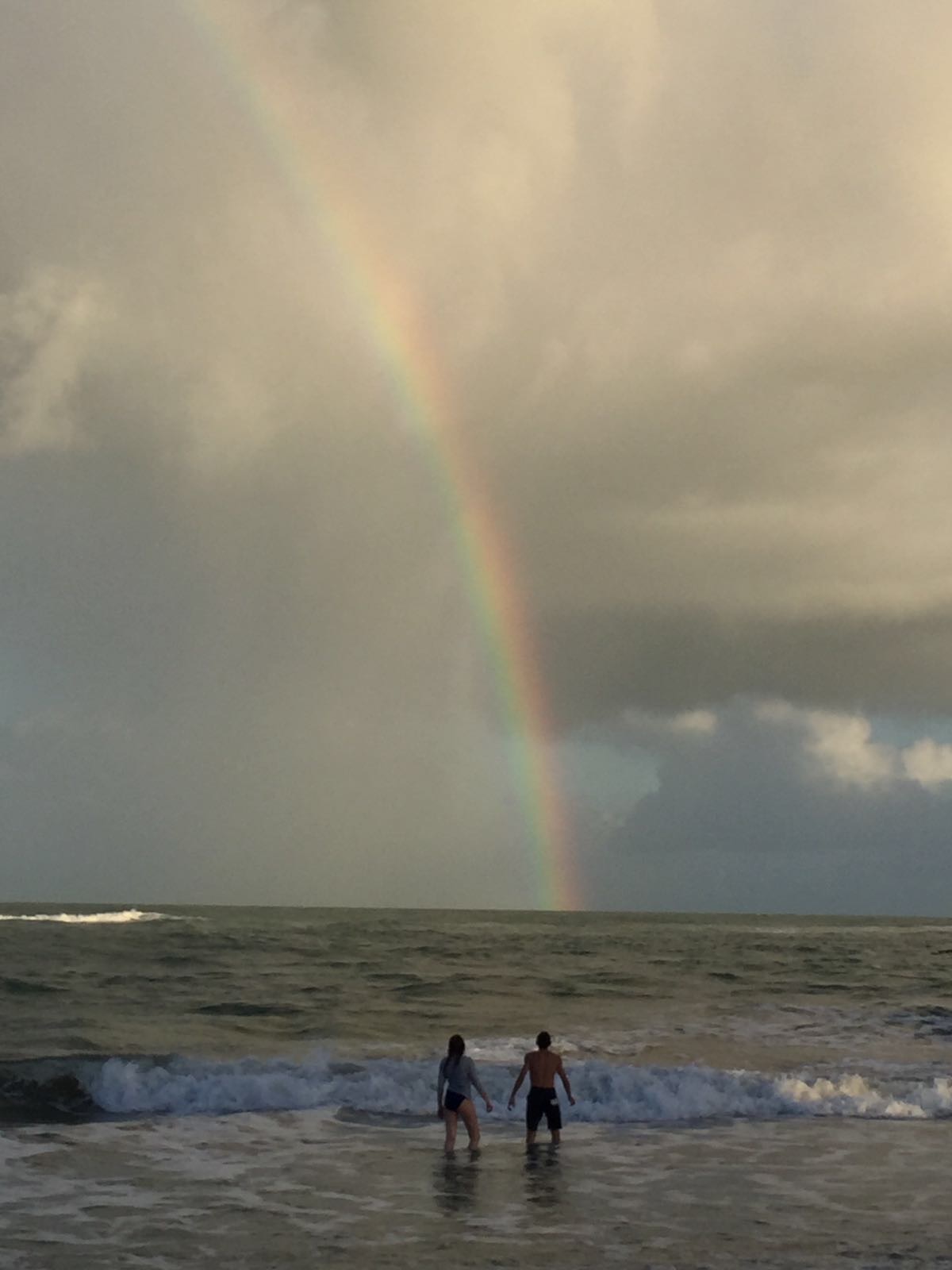
A rainbow at the end of the day at Porto de Galinhas beach, Brazil. Two of my children were swimming and just stopped and looked up in wonder.
Years ago I remember reading Malcolm Muggeridge’s book on Mother Theresa, who was just this week cannonized as a saint. He was one of the first people to put Mother Theresa’s work in the eye of the public with his documentary about her on BBC. Without soliciting funds, he was astonished when people began to flood his office with money for Mother Theresa’s work. He was later surprised when she wrote to him and told him how she had spent the money…she had purchased two beautiful candle holders for the altar in the chapel.